

Issue #7: In Conversation with Canadian Senator McPhedran
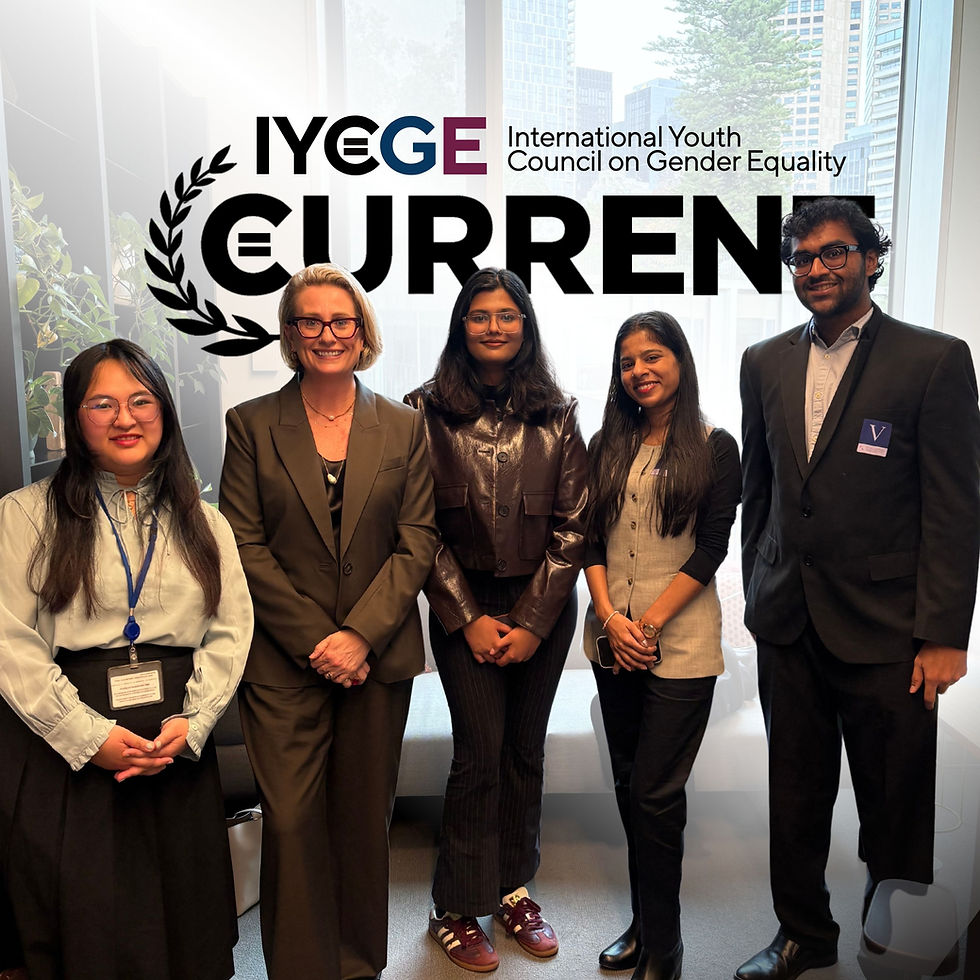
On April 8th 2026 The International Youth Council on Gender Equality, with Canadian Global Ambassador Elaine Wen, Government Relations Fellow Xavier Davis, and our Writing Lead, Charlize Acadia Donat, met virtually with Senator McPhedran on April 8th, 2026, to discuss youth engagement in Canadian politics, gender equality, and the evolving role of the Senate. She noted that she was speaking in a more personal capacity, and her comments reflect specific experiences throughout her life, rather than strictly her full ten-year period in the Senate.
The discussion was initiated with Senator McPhedran expressing interest in IYGCE’s work and mission, moreover, highlighting her vision to lower the federal voting ages to 16 or 17. She thoroughly emphasized that youth participation is essential to democracy, particularly given that youth make up most of Canada’s population and are the ones directly impacted by long-term policy decisions. However, the young adult vote turnout remains consistently lower than that of the older demographics, with only 46.7% of eligible voters within the ages 18-24 participating in the 2021 federal elections (Elections Canada, 2022). This exhibits the importance of early civics engagement and structural opportunities for youth participation, which McPhedran stressed.
A significant portion of the discussion covered the current political climate of Canada. Senator McPhedran raised concerns regarding the recent changes to Senate appointments, noting that no new appointments have been made under the current Prime Minister, Mark Carney. She mentioned the removal of the open application system introduced by the previous Prime Minister, Justin Trudeau, which had a goal of increasing transparency and accessibility in Senate appointments. Generally, she expressed her concerns about the contribution these changes would make to creating a more centralized and less independent Senate.
Legislative concerns were also addressed, particularly regarding Bills C-5 and C-12. McPhedran noted that there had been significant opposition to aspects of Bill C-5, especially Parts 5 through 8, yet the bill ultimately passed. She attributed this outcome, in part, to the political alignment within the Senate. These developments raised broader concerns about the future direction of policymaking in Canada.
The conversation also explored the representation within the Senate. Senator McPhedran acknowledged the progress made, noting that Canada’s Senate became one of the first in the world to achieve gender parity and continues to maintain equal representation. Women make up 48% of the Senate in Canada (Inter-parliamentary, 2023). This is a major achievement for Canada; however, it reveals the lack of gender parity representation worldwide and in other sectors. She shifts to talk about ongoing challenges, including the consistent failure of amendments proposed by Indigenous senators. Looking ahead, she predicted that future appointments may impact the diversity and balance kept within the institution.
Providing historical context, Senator McPhedran referenced former Prime Minister Stephen Harper, who viewed the Senate as fundamentally undemocratic and supported the idea of electing senators by province. She noted that Alberta implemented this approach, with Scott Tannas remaining the only elected senator. She also reflected on reforms introduced around 2015, which aimed to increase the influence of independent and younger senators, while moving the Senate away from functioning as an “echo chamber.”
Gender equality and government priorities were central themes discussed. Senator McPhedram expressed concern that, since March 2025, the Women and Gender Equality and Youth has received limited attention. Additionally, funds are being cut for women’s programs, youth initiatives and immigration. For example, organizations like Action Canada for Sexual Health and Rights have already received the repercussions of the limited funds by losing nearly half of their staff. These issues should be reflected more broadly, since Canada has seen ongoing disparities such as the gender wage gap, where women earn 89 cents for every dollar earned by men (Statistics Canada, 2023).
The role of civil society was pointed out in the meeting. Senator Marilou McPhedran stressed advocacy efforts such as a rolling joint letter campaign, allowing individuals to contribute their voices. She also referenced a conversation with Gerald Butts, underscoring the importance of accountability and open dialogue between policymakers and the public.
The meeting was concluded by Senator McPhedran, affirming that Canada is at a critical moment in time of transition, and the government is shifting focus from issues that affect many. Moreover, she strongly calls for continued youth engagement, collaboration and commitment to protecting inclusive institutions and sectors.



Comments