

Issue #6: In Conversation with Pakistan's Prime Minister's Youth Program
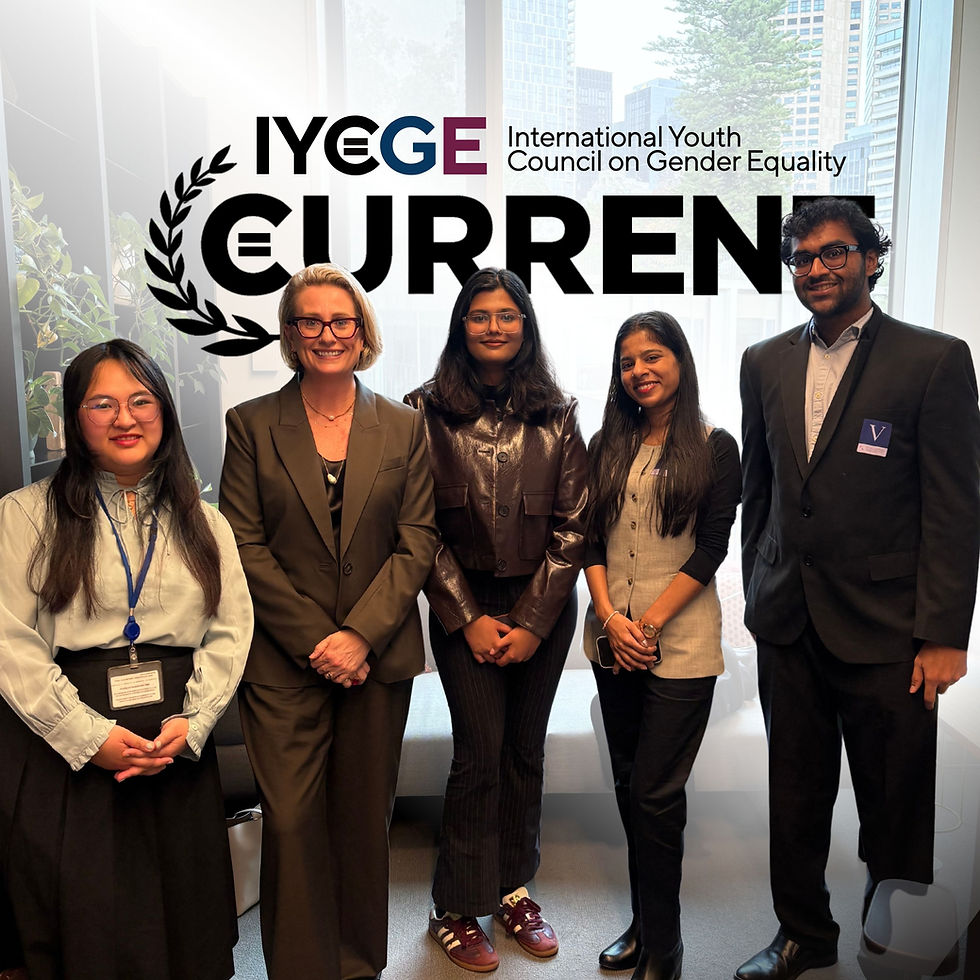
On March 31st, 2026, the International Youth Council for Gender Equality (IYCGE) held a meeting with representatives from the Prime Minister’s Youth Program (PMYP), based in the Prime Minister’s Office of Pakistan. The discussion brought together the Ambassador, Pakistan, Saad Bin Sarfraz, Government Relations Fellow Aliza Sultan, and the focal representatives for the Prime Minister’s Youth Program. The meeting focused on youth engagement, gender inclusion, and opportunities for collaboration within Pakistan’s policymaking landscape.
The conversation began with an introduction to IYCGE as a global youth council spanning over 80 countries, working towards the advancement of Sustainable Development Goal 5 (gender equality). The Council’s work centers on research, advocacy, and government relations, with a strong emphasis on bridging the gap between youth voices and policy action at both national and international levels.
The discussion then moved toward an overview of the Prime Minister’s National Youth Council, which comprises 113 members, including representation from both Pakistan and the diaspora. The Council maintains a 50/50 gender balance and includes transgender representation, reflecting a strong commitment to inclusivity and embedding gender perspectives within governance structures.
PMYP representatives outlined their role as an advisory body to the Prime Minister, contributing to development strategies and youth-related policymaking. Their initiatives are guided by the “4 Es” framework—Education, Entrepreneurship, Engagement, and Environment—ensuring a comprehensive and inclusive approach to youth development. With multiple ongoing projects under this framework, the program demonstrates a broad commitment to addressing diverse youth needs across the country.
A key area of discussion was the integration of gender within PMYP’s initiatives. The team highlighted their outreach efforts across universities and their involvement in shaping national-level policies, including work related to adolescent development. Both sides explored how existing efforts could be strengthened to further empower young women and ensure more targeted, impactful interventions.
The conversation also emphasized the importance of evidence-based policymaking. PMYP shared insights into a recent nationwide survey conducted across 35 major cities, aimed at better understanding youth perspectives. While detailed findings are forthcoming, this initiative presents a valuable opportunity for data-driven collaboration and informed program design.
As the discussion progressed, both parties expressed strong interest in establishing a sustained partnership. PMYP welcomed collaboration with IYCGE and indicated openness to receiving a detailed proposal outlining potential areas of joint work. This reflects a shared commitment to leveraging youth-led platforms to strengthen policy impact and inclusivity.
The meeting concluded with clear next steps, including the exchange of relevant documents, sharing of survey outputs, and the creation of a coordination channel to support ongoing engagement. A follow-up meeting with senior leadership is also anticipated to further advance the collaboration.
The discussion reinforced a central message: meaningful youth engagement, inclusive representation, and evidence-based action are essential to shaping Pakistan’s future. Strengthening collaboration between national institutions and global youth councils like IYCGE will play a vital role in advancing gender equality and empowering the next generation of leaders.



Comments