

Issue #5: In Conversation with Australian Senator Stewart
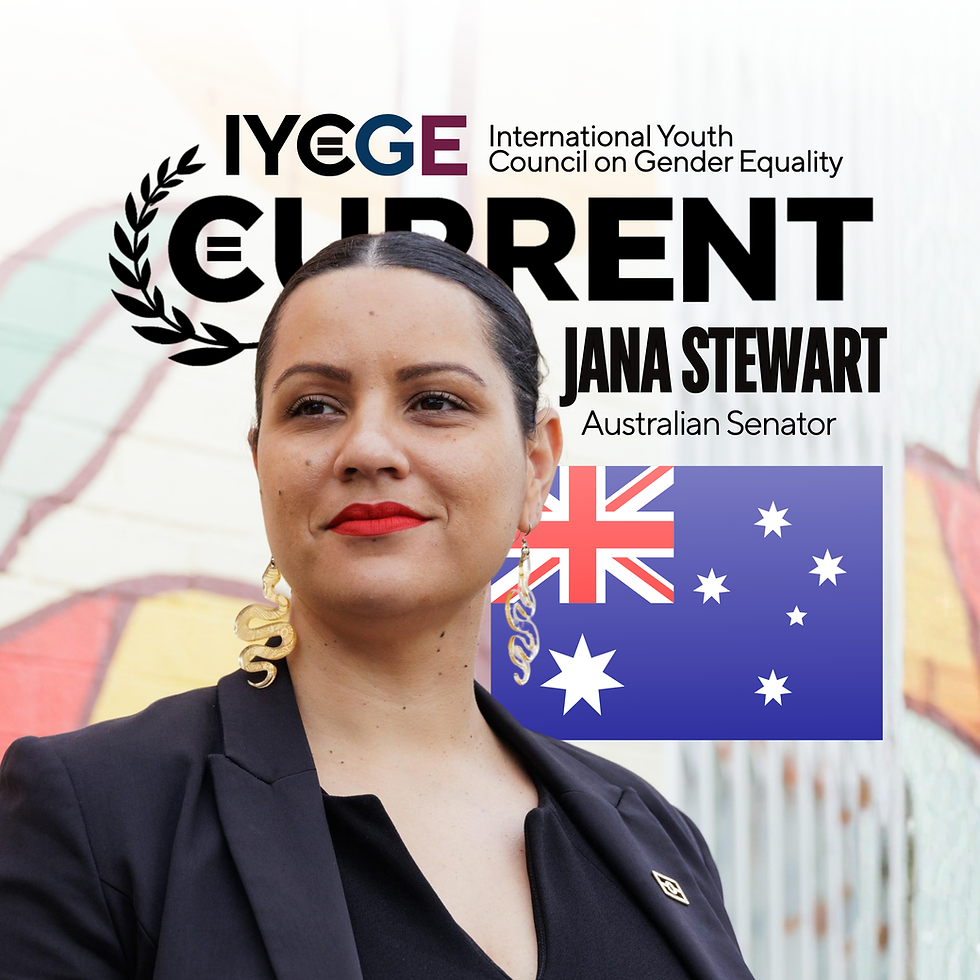
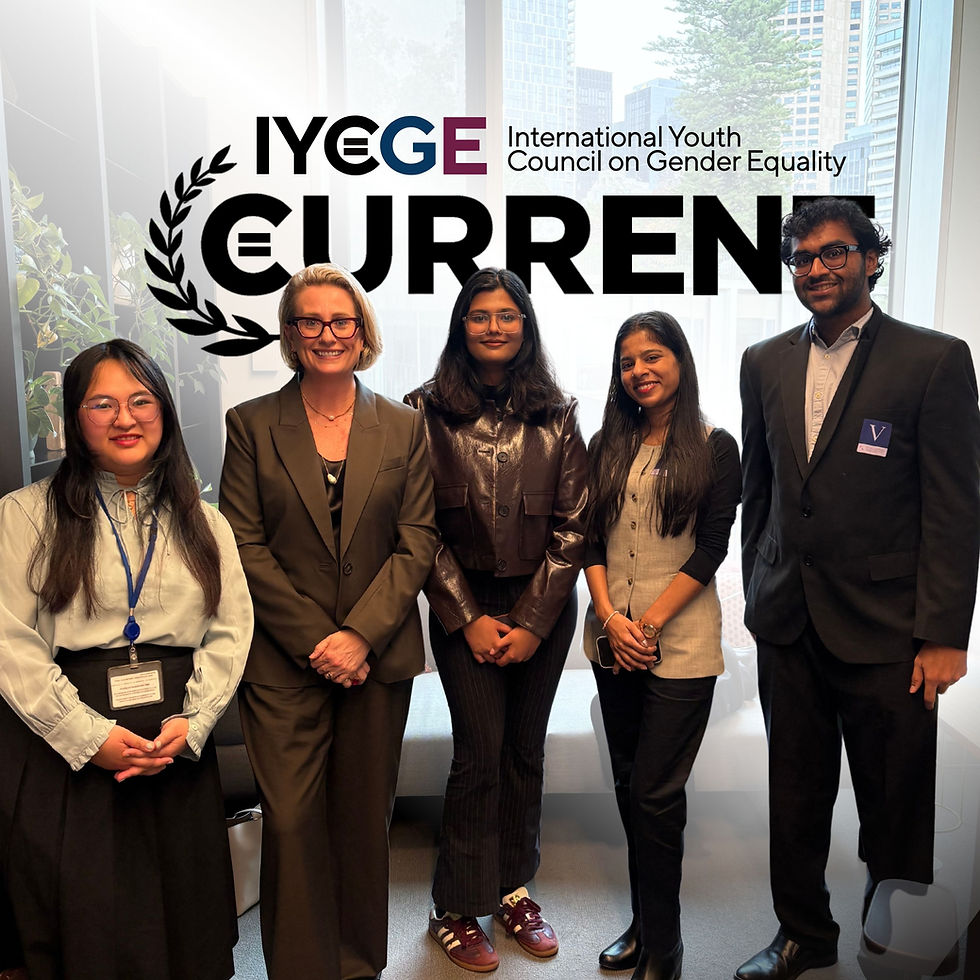
On March 27th, 2026, Senator Jana Stewart met with the Australian delegation of the International Youth Council on Gender Equality (IYCGE). The delegation was represented by the IYCGE National Team, Ambassador Tejasvini Adya, Government Relations Fellow Chatarina Hanny Angelita Teja, and Research Fellow Parv Haria. Our discussions centred on the gender pay gap, gender-based violence, and broader issues of gender equality that disproportionately affect Aboriginal and Torres Strait Islander Peoples.
Senator Stewart is the youngest First Nations woman elected to the Australian Federal Parliament and the first Aboriginal Labor Senator in Victoria. Prior to her political career, she completed two degrees to become a family therapist and worked across the Victorian Aboriginal Child Care Agency and the Child Protection System.
The conversation began with Senator Stewart recounting her personal and professional experiences that shaped her advocacy. Inspired by the matriarchs in her family and the generations of women from marginalised backgrounds, she credited decades of advocacy by those who came before her as the foundation that made her path possible and emphasised the importance of continuing the work to clear the path for Aboriginal women. As she put it: “Never forget where you come from, never forget the community, your people, and your family.” She also spoke about growing up in an environment affected by family violence and substance abuse, which has driven her sense of duty to stand up for those who face the same issues.
The discussion then turned to the challenges women continue to face in political participation. Senator Stewart stated that deliberate quota-setting and investment in women’s health have meaningfully shifted the landscape in which women can participate in politics. This was reflected in Australia’s historic achievement of a female majority in federal parliament. Representation matters, she noted, because gender balance directly shapes the type of legislation that the government brings forward. Yet politics, as she observes, is a privileged person’s game: cultural, socioeconomic and structural barriers, lack of support in care responsibilities, and lack of stable housing continue to limit women’s participation in traditionally male-dominated spaces.
These barriers extend beyond political participation and reflect broader patterns of inequality, particularly gender-based violence (GBV) and family and domestic violence (FDV). Senator Stewart reflected on the complexity of the issue: there is no single point of intervention through which GBV and FDV can be prevented. Yet, current policy approaches remain too heavily focused on tertiary prevention responses. She urged for stronger early prevention responses to make systemic reforms to address the underlying drivers of violence. She also acknowledged that there are stronger movements towards addressing GBV, but much of the work remains. In this context, she welcomed the release of the Australian Government’s standalone strategy, “Our Ways – Strong Ways – Our Voices: National Aboriginal and Torres Strait Islander Plan to End Family, Domestic and Sexual Violence 2026–2036,” describing it as a long overdue development for Aboriginal and Torres Strait Islanders communities. She also pointed to a broader shift in how victim-survivors are viewed, though children remain overlooked in prevention policies. Ultimately, she stressed that addressing GBV and FDV requires coordinated, cross-sectoral collaboration because it is deeply correlated with housing insecurity and cost-of-living pressures.
Subsequently, the issue of the gender pay gap was raised. Senator Stewart identified gaps in current data collection practices, noting the lack of intersectional measures that adequately capture the experiences of women and culturally marginalised communities. For instance, she argued that Australia’s reported national gender pay gap of 11.2% is not representative of the experiences of Aboriginal women, which contributes to eroding trust in institutional data and leaves these communities feeling disproportionately underrepresented in policies that affect them most. This highlights the need for more inclusive and accurate data collection to better inform policy responses.
Whilst discussing the role of organisations in contributing to meaningful change, Senator Stewart emphasised the importance of moving beyond a basic viability phase towards more deliberate and purposeful engagement, one that is grounded in intersectional approaches across both policy and practice. This means understanding how to navigate institutional structures and power dynamics, actively participating in party governance, and identifying the multiple avenues through which organisations can shape policy development. Where there are gaps that fall outside of the government’s visibility, particularly those affecting women of color and culturally marginalised women, organisations should bring them to their attention to ensure more inclusive and representative policy outcomes.
The meeting concluded with a discussion of potential areas for collaboration and continued engagement with the Senator. The Australian IYCGE delegation is grateful for the opportunity to speak with Senator Stewart and hopes that this will serve as a stepping stone toward achieving broader shared goals for advancing gender equality in Australia.


Comments