

Issue #4: In Conversation with Canadian Senator Wells
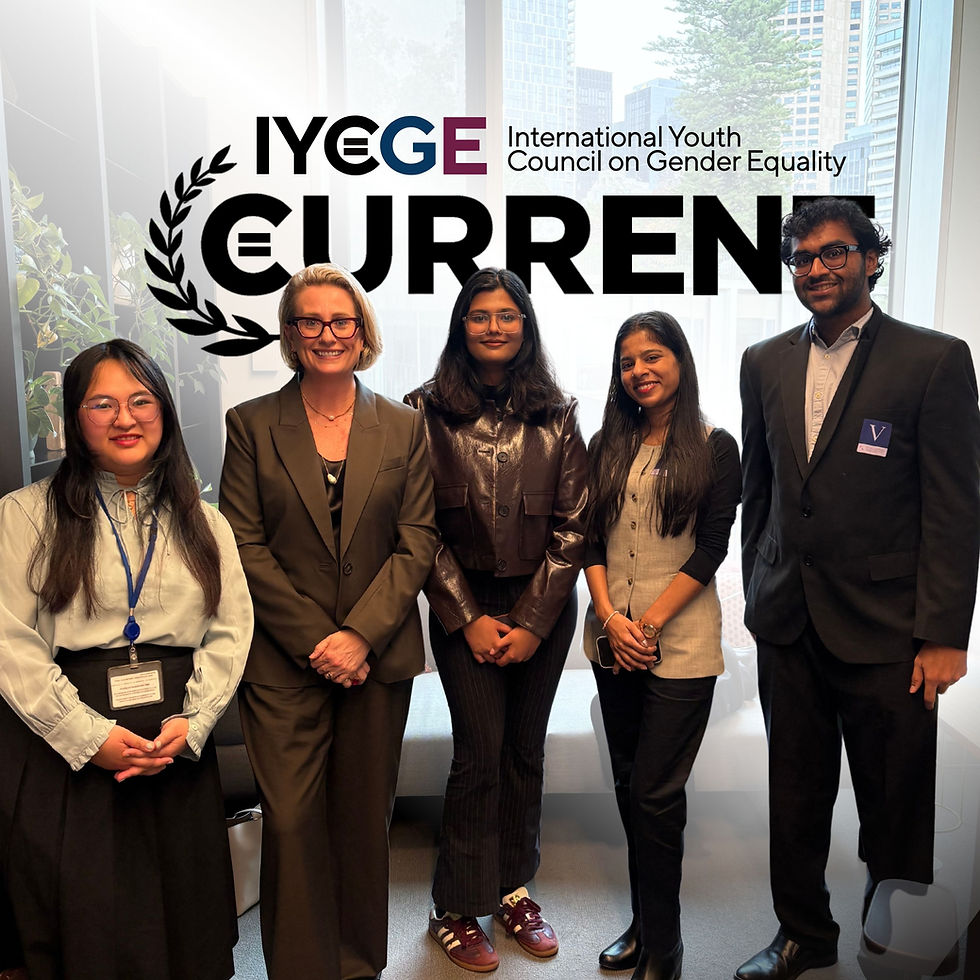
On April 2nd, 2026, Senator, professor, researcher, and advocate Kristopher Wells met with Canadian Global Ambassador Elaine Wen, Government Relations Fellow Xavier Davis, and our Writing Lead, Tima Karimi. We discussed advancing gender equality, strengthening youth involvement in policy making, and addressing current issues in Canada.
The conversation began with Senator Wells recounting his personal and professional experiences that shaped his advocacy. Influenced early on in life by his mother's work as a maternity nurse, he came to understand the importance of maternal health and care systems. He describes his approach to leadership as that of a “male ally”, emphasizing the responsibility to recognize and leverage privilege in support of women and LGBTQ+ communities. Before he was elected as a Senator, Wells worked as an educator and university professor for ten years. His efforts concentrated on enhancing school safety and inclusivity, as well as emphasizing the critical role of education in nurturing an inclusive and respectful society.
Throughout the discussion, he emphasized how much power young people have, believing that real change is possible when youth are engaged, informed, and ready to take action. He also identified a gap in Canada’s current system, the lack of opportunity for young people to participate in, or have representation, when it comes to big decision-making. Moreover, he believes youth should be able to vote since they make up 40.00% of Canada’s population and they hold substantial insight into the social, political, and economic issues that directly impact their present and future (Statistics Canada).
Key issues discussed included gender equality, mental health, and the evolving challenges facing Canadian democracy. Senator Wells expressed strong support for advancing policies such as recognizing femicide as a criminal offence, protecting bodily autonomy, and strengthening hate crime legislation to better support marginalized communities. He also raised concerns about the growing radicalization of young men and boys, stressing the importance of addressing identity-based insecurity and expanding access to mental health supports.
The conversation furthered, where the impact social media has on the spread of misinformation as well as youth engagement was discussed. Senator Wells noted that the overwhelming volume of information online can lead to apathy and disconnection, making it more difficult for young people to stay engaged in civic life. He also highlighted broader systemic challenges, saying that many societal issues, including poverty and inequality, are rooted in structures of power and oppression.
Whilst discussing pathways to change, Senator Kristopher Wells outlined three key steps: naming the conditions of oppression, reflecting on systems and community contexts, and taking informed action. He emphasized that truly understanding these systems is essential if we want to meaningfully address them. He encouraged us to speak up, join movements, and not let organizations silence our voices. He also highlighted that change does not always come from large-scale actions, but from consistent, smaller efforts and everyday choices. Senator Wells reinforced that education remains the most powerful tool for driving change, particularly when it allows critical understanding of the systems that shape society. Furthermore, he stated that Canada’s education system requires better funding and greater attention, as the youth are the future of this country. He encouraged youth to speak up, engage in movements, small or big, to ensure their voices are not diminished. Senator Wells expressed confidence that through these approaches, Canada has the potential to be a global leader in equality and justice.
The meeting concluded with a clear and empowering message: Young people are not just the future; they are powerful agents of change right now and have the potency to change national outcomes. Strengthening democracy and advancing equality will require courage, awareness, and active participation from youth across the country.



Comments