

Issue #2: In Conversation with Rwanda Women's Network
Updated: Aug 18
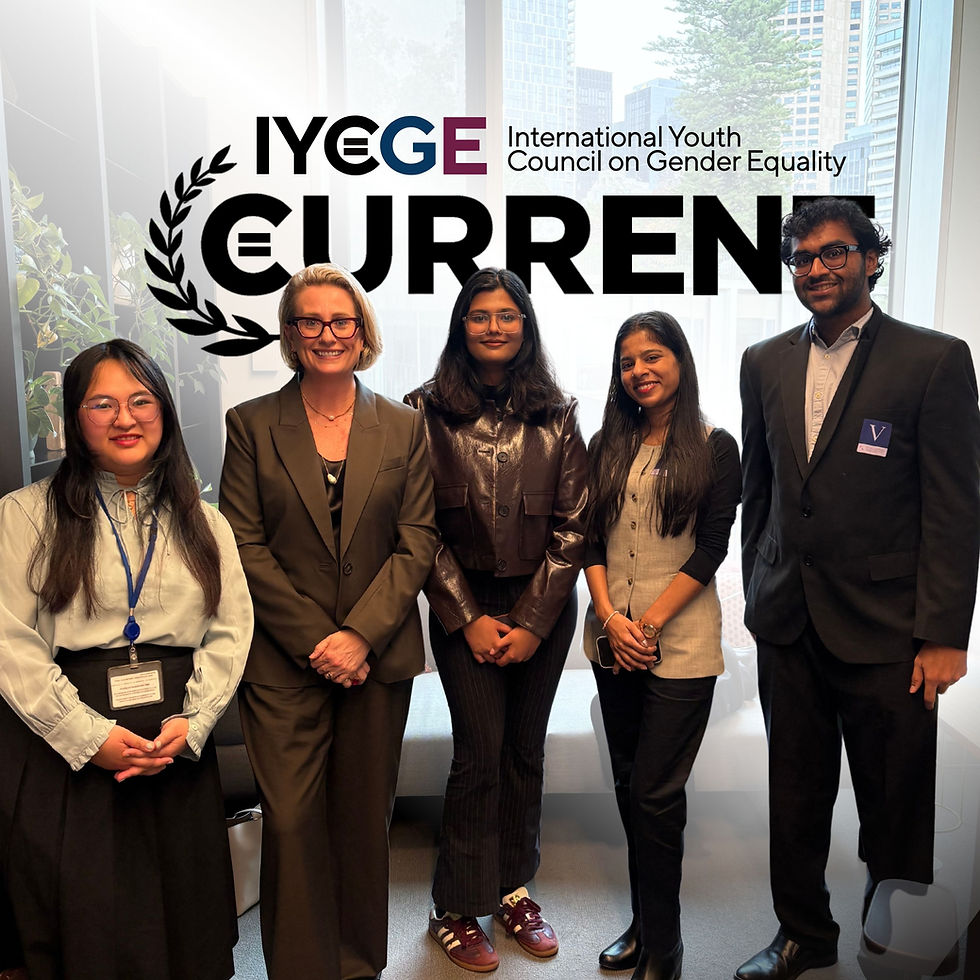
On January 23, 2026, Niyonshuti Jean Claude, Ambassador of Rwanda at the International Youth Council on Gender Equality (IYCGE), met with board representatives from Rwanda Women Network (RWN) for a high-level dialogue focused on women’s rights advocacy, youth leadership, and community-based strategies advancing gender equality in Rwanda.
Founded to respond to the realities faced by Rwandan women in the aftermath of national conflict and social transformation, Rwanda Women Network has grown into a leading civil society organization working at the intersection of gender justice, health, economic empowerment, and community development.
RWN’s model is grounded in long-term presence within local communities, where programs are shaped directly by the lived experiences of women and girls, including survivors of violence, rural women, and those facing structural barriers to opportunity. Representatives emphasized that sustainable gender equality cannot be achieved through short-term interventions alone, but through trust-building, consistent local engagement, and women’s leadership at every level.
A central theme of the conversation was gender-based violence (GBV) and the multifaceted approaches required for both prevention and response. RWN outlined its survivor-centred framework, which integrates psychosocial support, community awareness initiatives, and local education campaigns aimed at reducing stigma and encouraging early reporting.
Representatives noted that while legal reforms and national policies have created stronger protections in Rwanda, persistent social norms, economic dependence, and silence surrounding domestic and intimate partner violence continue to present challenges. RWN stressed that effective GBV prevention must address not only immediate safety, but also long-term social attitudes and economic vulnerability.
The discussion also addressed women’s economic empowerment as a critical component of gender equality. RWN highlighted how financial dependence can increase exposure to violence and limit women’s ability to seek help or assert their rights.
Through livelihood initiatives, skills development, and cooperative-based support models, RWN works to strengthen women’s economic resilience while fostering confidence and leadership. These programs are designed not only to increase income, but to shift power dynamics within households and communities.
Youth engagement featured prominently in the exchange. RWN emphasized that young people play a vital role in sustaining gender equality efforts through peer education, advocacy, and local leadership. Youth are seen as both beneficiaries and drivers of social change.
At the same time, representatives stressed that youth-led work is strongest when supported by mentorship and guidance from experienced women leaders and established organizations. Intergenerational collaboration was described as essential to building leadership pipelines and ensuring continuity in advocacy efforts.
Representatives explored strong alignment between RWN and IYCGE in areas such as youth leadership development, mentorship for young women and girls, and community-based awareness efforts related to gender equality and GBV. Both institutions underscored the importance of creating spaces where young leaders can learn from grassroots expertise.
WN also spoke to the importance of collaboration with civil society organizations and institutions in advancing gender equality. Partnerships were described as essential for translating advocacy into sustained impact and for keeping gender equality visible within broader social and political contexts.
The conversation concluded with a shared recognition that effective gender equality work depends on long-term community engagement, intergenerational collaboration, and continued dialogue between institutions and youth leaders.



Comments