

Issue #9: In Conversation with Mahnoor Omer
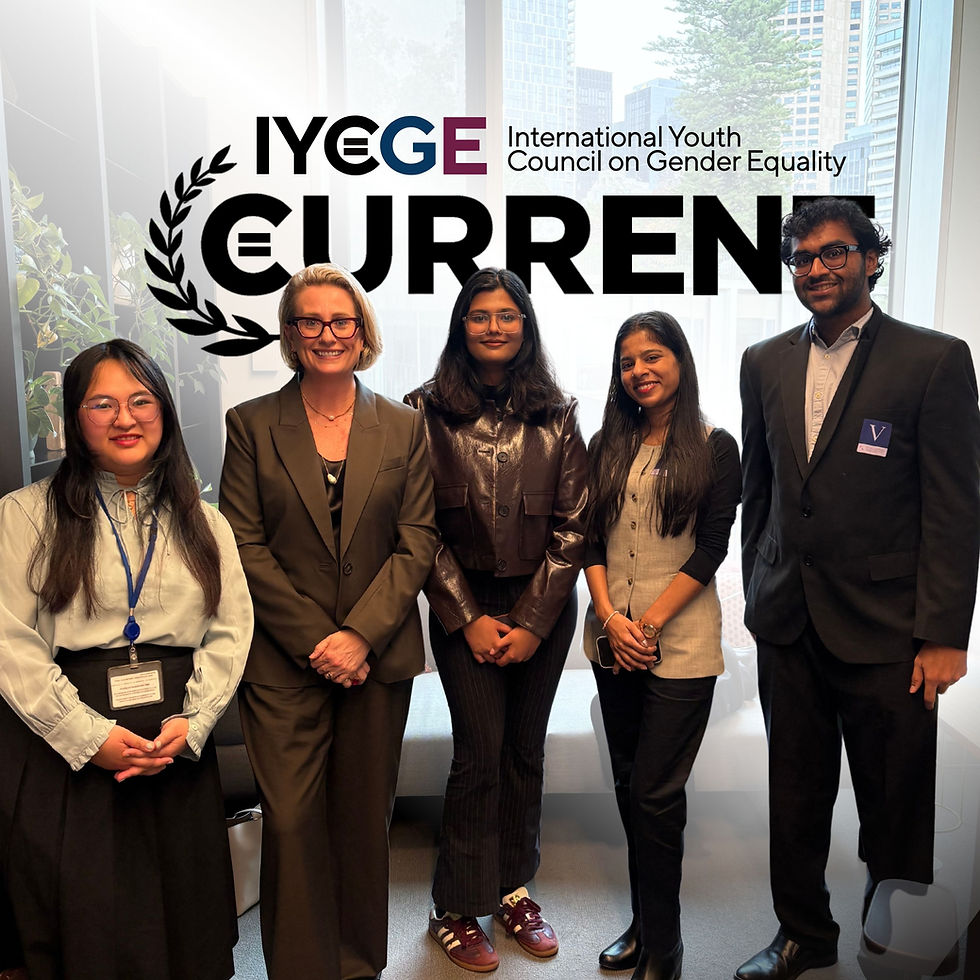
Mahnoor Omer started volunteering at 16. Nine years later, she has undertaken a landmark constitutional case against the government and has been recognized as one of TIME’s Women of the Year 2026. Aliza Sultan (Government Fellow, Pakistan) and Saad Bin Sarfaraz (Ambassador, Pakistan) connected with her in April to discuss the period tax, the politics of change, and the future of Pakistan’s socio-political landscape.
When Mahnoor began her activism, she realized that the organizations she was working with had to spent more on administrative overheads than they did on creating tangible impact. To take programming directly to the communities she intended to serve, she founded the Noor Foundation. She quickly realized that systems often fail not because solutions don’t exist, but because access to them is restricted.
The same insight shaped her work on period poverty. As she challenges Pakistan’s 40% tax on menstrual products, she points out that the case is about more than the discal terms that often define it. Beyond affordability, period poverty is shaped by access to sanitation, public awareness, and broader social norms that govern how such issues are discussed. On a constitutional level, it is about the lack of lived experience in decision-making.
Pakistan’s political system, like many others, represents a narrow portion of society because of structural exclusion. Seventy-eight political parties have no women members. Women who do make it to the political ranks often have their voices silenced through systematic barriers by male-majority voting blocs. However, what is representation without influence if not tokenism repacked?
These structural limitations extend to the broader socio-political ecosystem, particularly for young women. Access to mentorship, network, and institutions remains limited and a culture of gatekeeping restricts access to resources. These challenges further restrict the range of voices that can inform social norms and public discourse.
However, Mahnoor emphasized that the emergence of organizations such as IYCGE represents an upcoming shift in the Pakistani landscape. With a growing youth population and digital penetration, political engagement has expanded and spaces for discourse are widening. While this does not transform institution, it does generate momentum for change.
Ultimately, the conversation provides insight into how policy frameworks and development instruments engage with gendered experiences. Addressing the gaps between representation, empowerment, and capacity to influence change requires a staunch institutional commitment. IYCGE Pakistan will continue to support Mahnoor’s advocacy on period poverty, particularly as her case approaches its conclusion, while support broader efforts to strengthen gendered thought in policymaking.



Comments