

Issue #13: In Conversation with Barbara Poggio
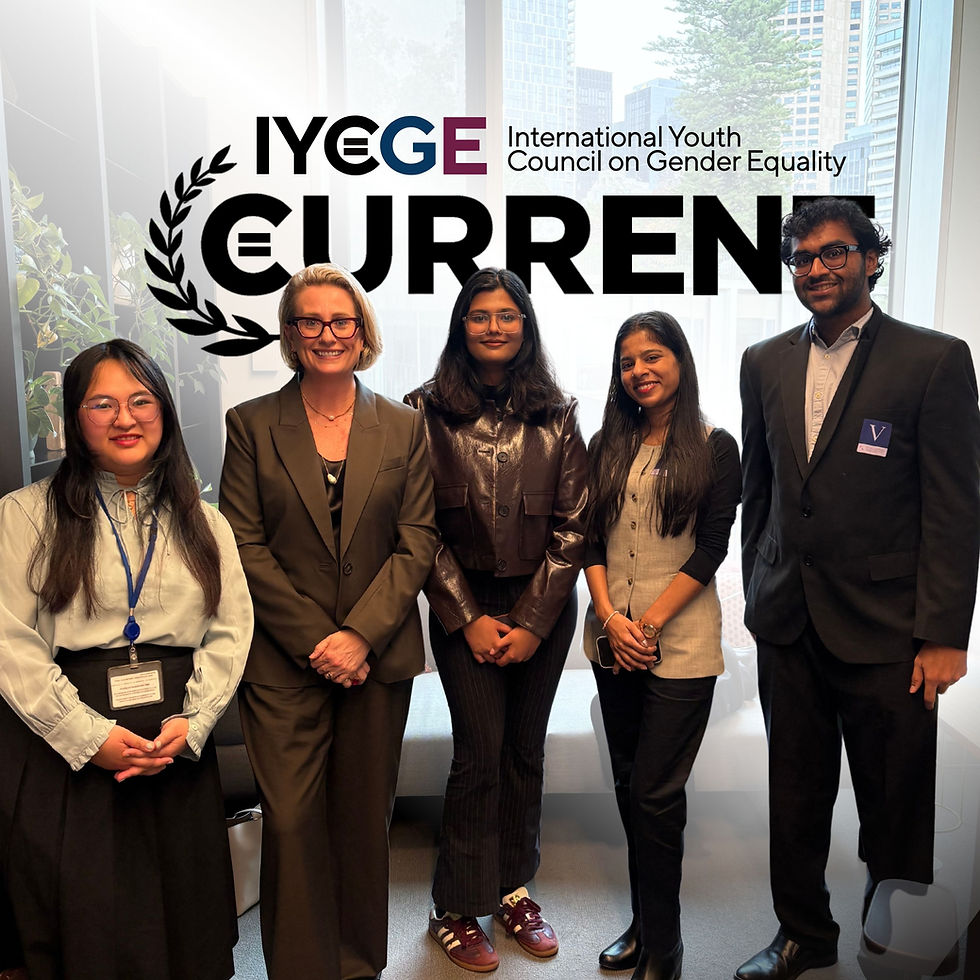
On July 21st, Barbara Poggio met with Valeria Zonca, Junior Administrator, Policy Enforcement of the International Youth Council on Gender Equality (IYCGE). The discussion centred on institutional strategies for equity and diversity in academia, the balance between structural and cultural change needed to address inequality, and the role of students as agents of transformation within universities.
Barbara Poggio is a sociologist specialising in labour and organisations, and has served as Vice-Rector for Equity and Diversity Policies at the University of Trento since 2014. In this role, spanning two mandates, she has built the university's dedicated governance structure for equity and diversity from the ground up a structure that did not exist prior to her appointment positioning the University of Trento as a national frontrunner in the field.
The conversation opened with an account of building a dedicated governance structure. Poggio explained that when she took on the role, no formal framework existed at the University of Trento to address disparities related not only to gender, but also to ethnicity, age, and disability. Over two mandates, this work has substantially improved the university's standing in these areas, establishing it as a point of reference within the national academic landscape.
Discussion then turned to the strategic priorities driving gender equality in academia. Poggio underlined that universities carry a distinct responsibility: to produce knowledge and to make visible the mechanisms of inequality that often go unnoticed even by colleagues within the institution. She identified data measurement and monitoring as a foundational priority, alongside the development of dedicated training pathways both for students within degree programmes and for academic staff.
Poggio was equally clear that progress requires a dual approach combining structural and cultural interventions. Structural measures include work-family conciliation policies and career-correction mechanisms, while cultural change is essential to counter harassment, problematic micro-practices, and inappropriate language phenomena that demand greater collective awareness rather than policy alone.
A significant portion of the conversation focused on the "Finisce Qui" (It ends here) awareness campaign, an initiative adopted by several Italian universities and recognised at the European level. The campaign uses short, everyday phrases touching on gender, disability, and sexual orientation to expose how seemingly banal comments can, in academic settings, be inappropriate or discriminatory aiming for immediate cultural impact rather than abstract policy messaging.
On the role of students as allies for change, Poggio was emphatic: students and student associations are essential partners capable of overcoming internal institutional resistance. She stressed the importance of actively involving new generations in decision-making and in identifying priorities, citing the participatory design of the "Finisce Qui" campaign as a concrete example of this approach in practice.
The conversation closed on a note of institutional responsibility and shared ownership. Poggio argued that institutions have a duty to create spaces for listening and dialogue, rather than delegating the full weight of change to younger generations. She pointed to the stalled development of a proposed "citizenship certification" intended to integrate skills on misinformation, technology, and civic participation tools into academic pathways as an example of an educational opportunity still unrealised.
IYCGE is grateful to Barbara Poggio for sharing her experience and perspective. This conversation is part of CURRENT's ongoing series exploring gender equality governance across academic and institutional contexts worldwide, and it is hoped that her insights will contribute to a broader understanding of how universities can drive structural and cultural change.



Comments