

Issue #11: In Conversation with Tatiana Rein
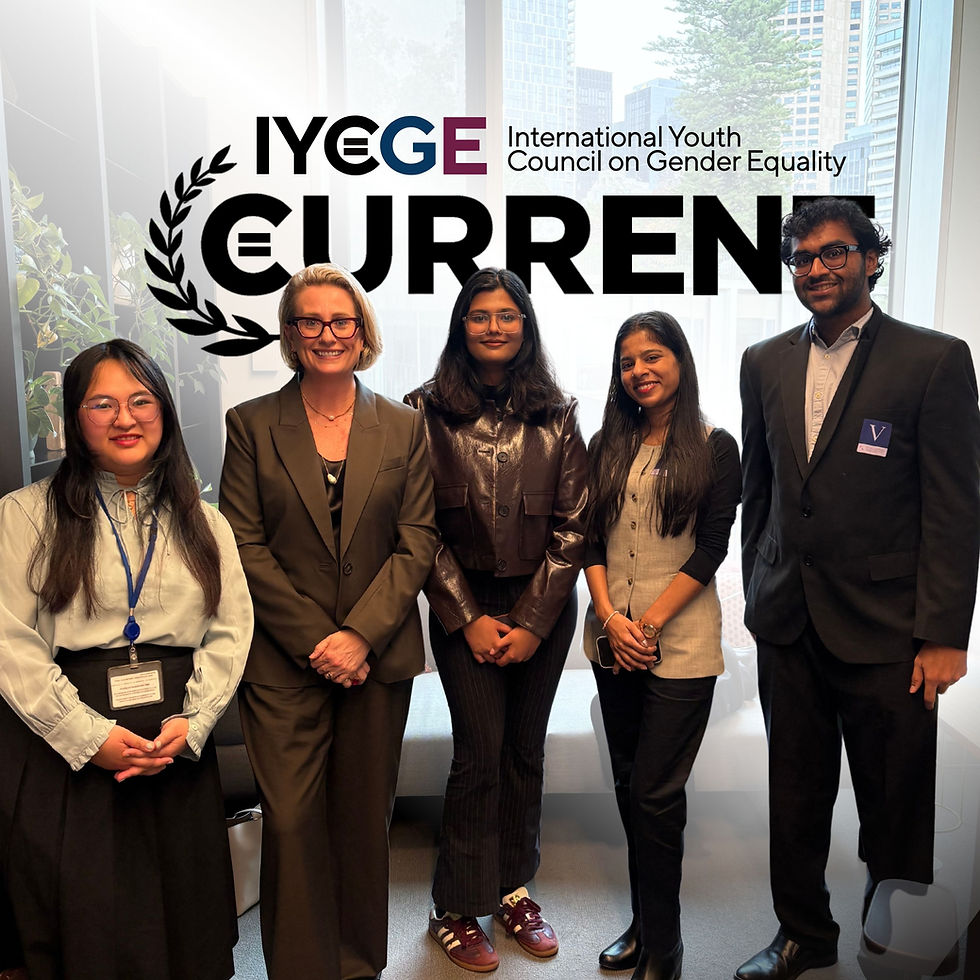
On April 10th, Tatiana Rein met with the Chilean delegation of the International Youth Council on Gender Equality (IYCGE). The delegation was represented by the IYCGE Chile Ambassador and the Government Relations Fellow. The discussion centred on the threat of dismantling of gender policies in Chile, the implementation gaps in legislation on violence against women, and the groups most exposed to the rollback of institutional protections.
Tatiana Rein is a lawyer and academic at the Universidad de Chile, holding a Master's degree in International Studies from the Institute of International Studies (IEI) and a Doctorate in Political Science from the University of Essex, England. She has extensive experience in international human rights law, gender-based violence, and feminist legal theory, including work with Amnesty International. From 2014 to 2022, she served as Chile's Titular Expert before the Follow-up Mechanism of the Inter-American Convention on the Prevention, Punishment and Eradication of Violence Against Women (MESECVI), known as the Belém do Pará Convention, under the Organization of American States (OAS) — a role in which she rose to Vice-President of the mechanism between 2017 and 2019, and subsequently served as its President from 2019 to 2021.
The conversation opened with an assessment of Chile's legislative advancements on violence against women. Rein acknowledged that Chile has made meaningful progress in recent years, noting that the country's most recent legislation on violence against women represents a more comprehensive framework — one that addresses a broader range of forms of violence and incorporates an intersectional lens that extends protections beyond women to include other groups, such as the LGBTQ+ community. She underscored, however, that different communities face distinct and compounding forms of violence, and that legal frameworks must account for this complexity.
The discussion then turned to what Rein described as the most critical outstanding debt: implementation. While Chile has advanced significantly in the design of laws and public policies, the translation of these frameworks into practice remains deeply uneven. She identified a lack of systematic training for professionals in key sectors — particularly health — as a central gap. Coordination between the institutions responsible for attending to survivors is often insufficient, and this problem is compounded by a persistent centralization of resources, which leaves regions with fewer staff, fewer shelters, and less capacity to respond adequately. Emergency shelters, she noted, tend to operate on the basis of goodwill rather than adequate public funding. Training in gender sensitivity among front-line officials — police, judiciary, health workers — depends largely on individual motivation rather than institutional mandates. While Chile's Judicial Academy has developed preparation courses for judges, and some police units have made advances, these gains have not spread consistently across regions or precincts.
The conversation then necessarily shifted towards the political economy of gender policy erosion, as there is still important work left to be done towards the goal of gender equality, where the government commitment is highly relevant. Rein explained that gender equality initiatives are particularly vulnerable to shifts in government priorities precisely because of their perceived consensual nature: no government openly advocates for violence, which can create a false sense of institutional stability. In practice, however, erosion occurs not through the elimination of laws but through the quiet withdrawal of resources — defunding of shelters, discontinuation of training programmes, elimination of gender sub-units within ministries, and a reduction in inter-ministerial coordination. Programmes targeting sub-groups — migrants, trans women, women in poverty — are especially susceptible to these cuts, as they lack the political visibility that broader women's rights initiatives may command.
When asked about early warning signs of institutional rollback, Rein pointed to two key indicators: the removal of leadership within SERNAM (Chile's National Women's Service) and reductions in the institution's budget. She also flagged cuts to financing for sexual and reproductive rights as a significant alarm signal, as well as the broader phenomenon of economic strangulation — a process whereby consulting firms, businesses, and academic institutions progressively disengage from gender equality work as financial incentives and contractual obligations diminish. The elimination of gender-focused academic programmes, including postgraduate degrees and research grants through FONDECYT, represents a further structural risk.
Rein also drew attention to what she described as a conceptual and communicative challenge: the deliberate misrepresentation of "gender" as an ideology rather than an analytical category. She urged academics, advocates, and civil society to respond not through defensiveness but through evidence — providing concrete data that demonstrates the significance of the concept beyond biological difference. This, she noted, is a front on which feminist movements and academic institutions have not yet found an effective response.
On the question of collective response, Rein expressed cautious optimism. She identified academic mobilization and feminist civil society organizations as the most likely actors to articulate a visible response to policy rollback. While these organizations have not always been fully active, she anticipated a strengthening of their coalitions in the face of renewed threats. The challenge, she emphasized, is not only to react but to make the consequences of dismantling policies legible and compelling to the general public.
The Chilean IYCGE delegation is grateful to Tatiana Rein for sharing her expertise and perspectives. This conversation is part of CURRENT's ongoing series on the state of gender equality governance across the globe, and it is hoped that her insights will contribute to a broader understanding of the structural challenges facing gender policy implementation in Latin America and beyond.



Comments